A Generous Heart
Jesus talked a great deal about money, possessions, generosity, and what we do with what God has placed in our hands. That should probably make most of us a little nervous. We would much rather hear a sermon about love, grace, or heaven than one suggesting that perhaps our bank account has something to do with our spiritual life.
Yet throughout the Gospels, Jesus returns again and again to generosity. In at least a dozen significant teachings and encounters, He calls His followers beyond merely giving what is convenient and toward a generosity that can actually cost us something.
In the Sermon on the Mount, Jesus tells us, “Give to the one who asks you” (Matthew 5:42). He tells the rich young ruler to sell his possessions and give to the poor (Matthew 19:21). He praises the poor widow who drops two tiny coins into the temple treasury because, unlike those who gave from their abundance, “...she, out of her poverty, put in everything—all she had to live on” (Mark 12:44). He tells us that where our treasure is, our heart will be also (Matthew 6:21). And in the story of the Good Samaritan, generosity is not merely feeling sorry for somebody lying beside the road. The Samaritan stops, tends the man’s wounds, transports him to an inn, pays the bill, and even promises to cover whatever additional expenses may arise (Luke 10:30-37).
Apparently, Jesus believed compassion occasionally comes with an invoice.

Christian giving, therefore, is more than fundraising. It is a spiritual discipline and, for some, a particular spiritual gift. St. Paul would later speak specifically of the gift of giving and tell those who possess it to give generously (Romans 12:8). But generosity is not reserved for people who happen to have that gift. All of us are invited into the discipline because giving slowly changes the giver. It loosens our grip on possessions and reminds us that everything we have was first placed into our hands by God.
Our own church has experienced this in a very visible way.
Not long ago, part of our property was simply an old asphalt-covered parking lot. Now, I have nothing against parking lots. Churches need someplace to put automobiles, and heaven knows we church people can become remarkably possessive about our favorite parking space. But our congregation decided that this piece of property might serve a greater purpose.
So the church decided to convert it into an inviting accessible respite for our neighbors. With vision, generosity, considerable work, and—I am convinced—the outpouring of the Holy Spirit, what was once asphalt became Charis Park, a beautiful place of rest, gathering, recreation, and community. Concrete and pavement became a loving gift of God’s welcoming presence to our neighborhood. In a very real sense, generosity transformed a parking lot into radical hospitality.
That is what a generous heart does.
BUT, we should remember something very practical. The church does not manufacture widgets, sell automobiles, or operate a chain of convenience stores. Her principal source of income is the committed donations and contributions of her members. Every ministry we undertake, every person we help, every child we teach, every outreach effort we support, and every community resource such as Charis Park, ultimately begins with each of us deciding to give.
Paul reminds us that “God loves a cheerful giver” (2 Corinthians 9:7). Notice he says cheerful—not miserable, resentful, or some soul (me many times) who releases their offering only after a brief wrestling match with the demands of the household budget.
Generosity is gratitude put into action. It says, “God has been generous with me, and therefore I will be generous with others.” A generous church begins with generous people. And generous people begin with hearts that understand that what we possess was never really ours alone.
Sometimes God can even take an old parking lot—and through generous hearts turn asphalt into welcoming grace.
Peace,
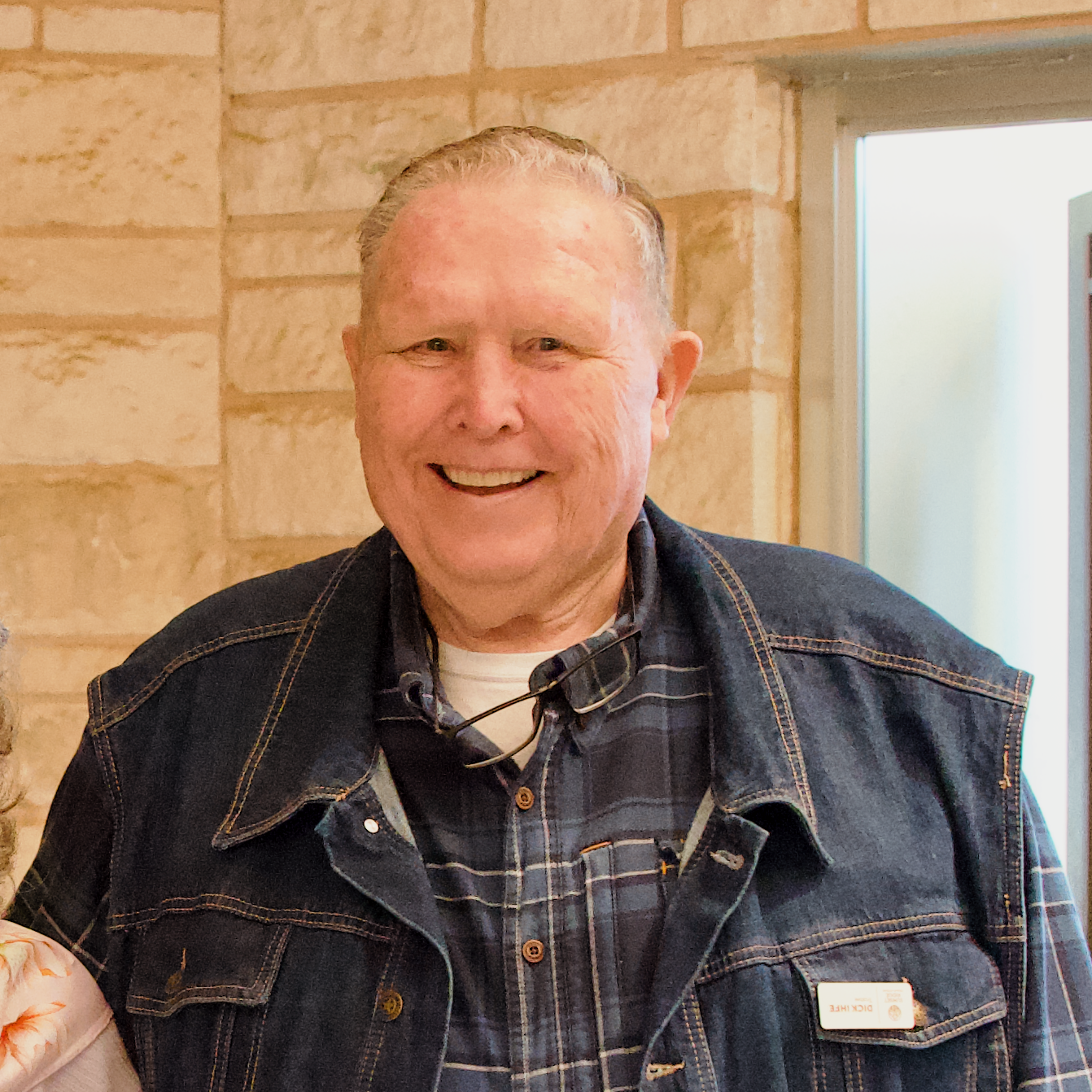
Dick Ihfe, D. Min.
Trustee